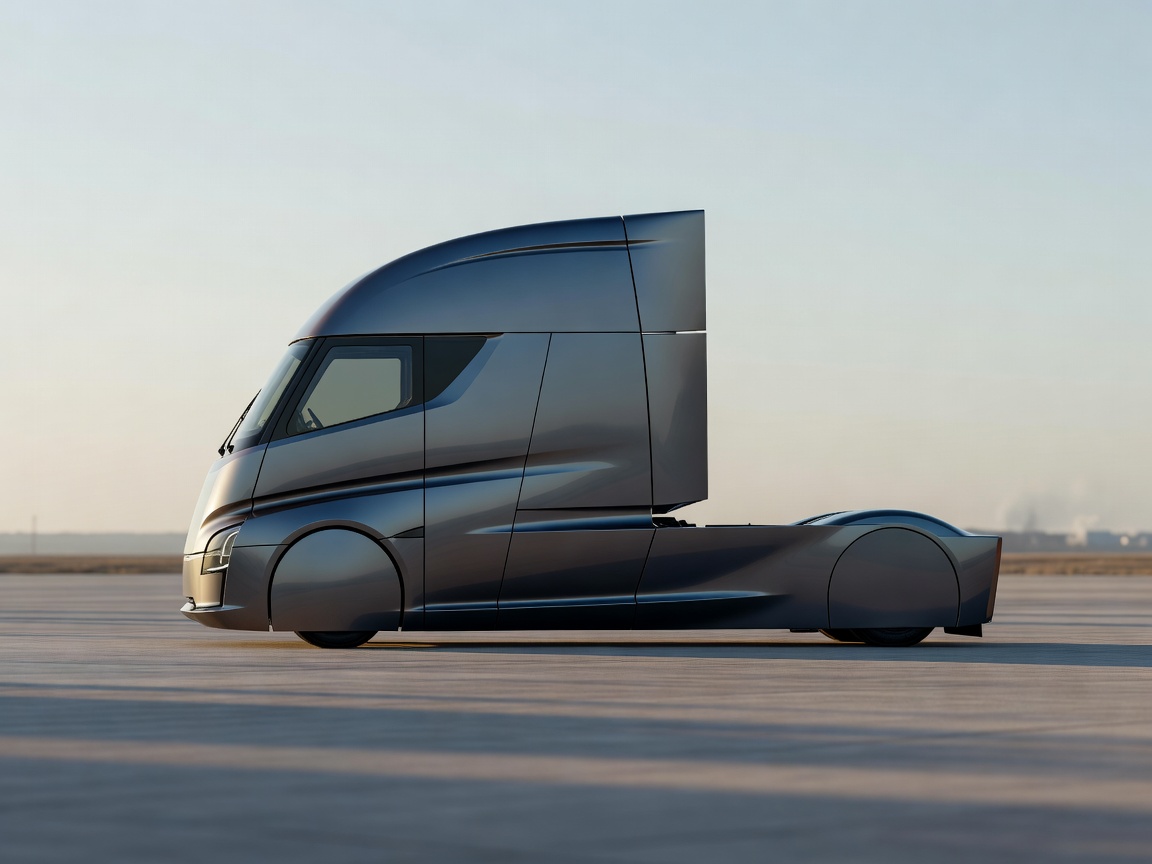
The Physics of Highway Drag
At highway speeds exceeding 55 mph, aerodynamic drag accounts for over 50% of a Class 8 truck's total fuel consumption. Overcoming this air resistance requires massive engine output. Historically, the boxy profiles of commercial transport vehicles created substantial low-pressure wakes and turbulent airflow, essentially pulling the vehicle backwards. Today, fleet margins are too tight to ignore the physics of drag.
Modern aerodynamic packages approach the tractor and trailer as a single, cohesive unit. Instead of air colliding with the flat face of a cab and then detaching wildly around the gap between the tractor and trailer, modern designs seek to keep the boundary layer attached to the vehicle's surface for as long as possible.
Essential Aerodynamic Components
1. Roof Fairings and Cab Extenders
The transition from the top of the tractor cab to the top of a 13-foot, 6-inch dry van trailer is a major source of drag. Roof fairings act as a ramp, guiding oncoming air smoothly over the top of the trailer rather than allowing it to slam into the trailer's front bulkhead. Cab extenders (side fairings) perform a similar function, closing the lateral gap between the cab and the trailer to prevent crosswinds from entering the turbulent zone behind the sleeper cab.
2. Chassis and Trailer Skirts
Airflow passing underneath the vehicle encounters a jagged landscape of axles, drive shafts, air tanks, and crossmembers. Chassis fairings on the tractor and side skirts on the trailer deflect air away from the undercarriage. Typical side skirts can yield a fuel efficiency improvement of up to 5% by simply keeping the high-speed air traveling along the smooth exterior of the trailer rather than getting caught in the mechanical components underneath.
3. Rear Trailer Aerodynamics (Boat Tails)
The abrupt flat end of a standard dry van trailer creates a massive low-pressure vacuum wake. As air detaches from the sides and roof, it swirls into this vacuum, creating a sucking effect that pulls the truck backward. "Boat tail" fairings—fold-out panels attached to the rear doors—extend the aerodynamic profile, tapering the rear of the vehicle to allow the air streams to merge more gently, significantly reducing the size of the turbulent wake.
Cost-Benefit Analysis for Fleets
Retrofitting older equipment with aerodynamic devices requires upfront capital expenditure. However, the return on investment (ROI) is highly predictable based on annual highway mileage.
| Component | Estimated Drag Reduction | Typical Highway Fuel Savings |
|---|---|---|
| Roof Fairing | 10-15% | 4-6% |
| Trailer Side Skirts | 10-12% | 4-5% |
| Trailer Rear Fairing (Boat Tail) | 8-10% | 3-5% |
| Wheel Covers / Aero Mud Flaps | 2-3% | 1-2% |
It is important to note that these savings are not purely additive. A truck equipped with every aerodynamic modification will experience diminishing returns, but a comprehensive package commonly yields an overall fuel savings of 9% to 12% compared to a non-aerodynamic vehicle operating at sustained highway speeds.
Operational Limitations
While the mathematical benefits of aerodynamics are clear for line-haul operations, they are not universally applicable. Fleets engaged in regional delivery, construction, or urban routes spend a high percentage of their time below 45 mph, where aerodynamic drag is secondary to rolling resistance and inertial mass. Furthermore, ground-hugging fairings are susceptible to damage from uneven terrain, steep dock inclines, and deep snow, leading to increased maintenance costs that can negate fuel savings in severe-duty applications.