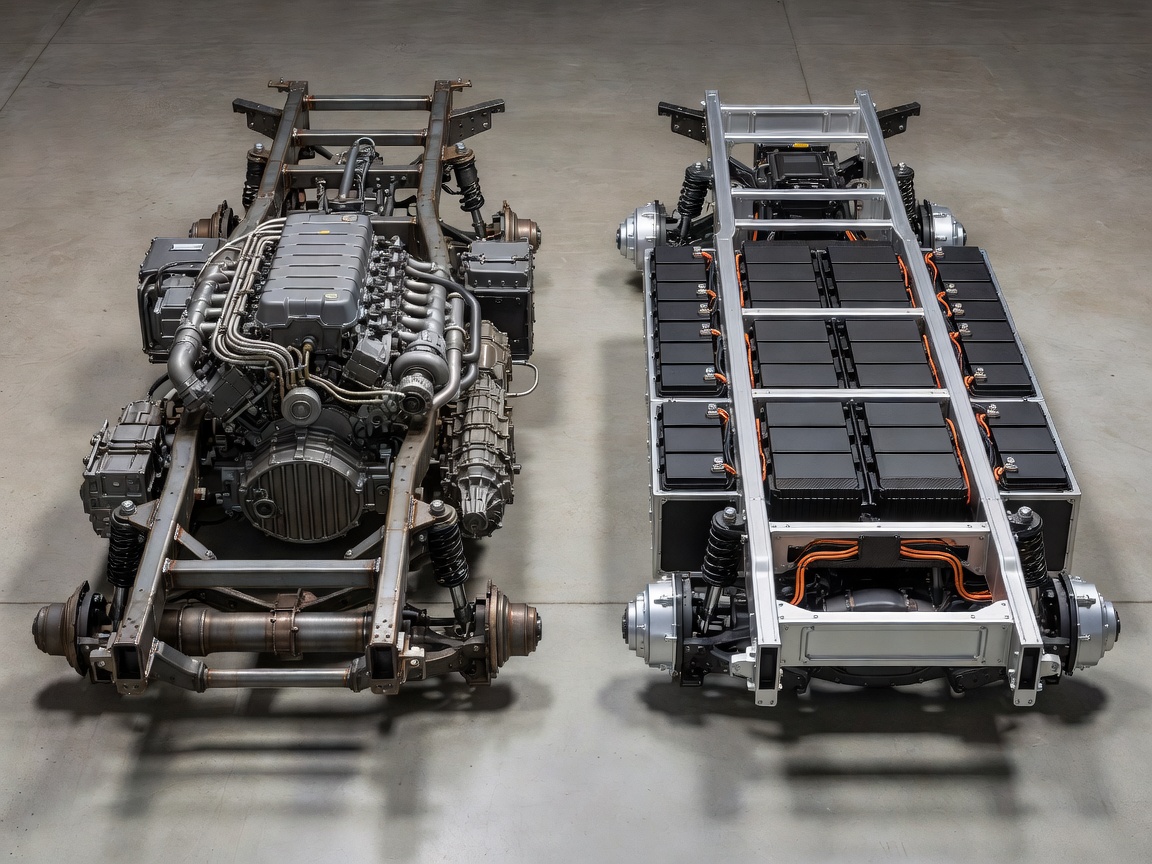
The State of Heavy-Duty Propulsion
For decades, the 13-to-15-liter inline-six diesel engine has been the undisputed king of heavy transport. Offering massive torque at low RPMs and unparalleled range density, diesel is the standard by which all alternatives are measured. However, the rise of Battery Electric Vehicles (BEVs) in the Class 8 segment forces fleet managers to navigate entirely new calculations regarding payload, route planning, and refueling infrastructure.
Torque Delivery: Combustion vs Electric
Internal combustion engines must spool up to reach their peak torque band, typically between 1,000 and 1,400 RPM for modern heavy-duty diesels. This necessitates complex 10-to-18-speed transmissions (manual or automated) to keep the engine in its optimal power band while accelerating an 80,000 lb Gross Combined Weight Rating (GCWR) load.
Electric powertrains fundamentally alter this dynamic. Electric motors deliver 100% of their peak torque from zero RPM. This instant torque eliminates the need for multi-gear transmissions, usually relying on direct drive or simple two-speed gearboxes. The result is smoother acceleration, less driveline shock, and significantly reduced driver fatigue in stop-and-go conditions.
The Payload Penalty
The physical energy density of diesel fuel compared to lithium-ion battery packs creates the primary bottleneck for BEV adoption in line-haul operations. A typical long-haul diesel tractor carries around 200 gallons of fuel, weighing approximately 1,400 lbs, yielding a range of over 1,200 miles.
To achieve even a fraction of that range—typically 200 to 300 miles—a Class 8 BEV requires massive battery packs weighing between 8,000 and 10,000 lbs. Even with regulatory exemptions allowing slight gross weight increases for electric trucks in some jurisdictions, this battery weight directly cannibalizes payload capacity. For fleets "weighing out" (hitting maximum weight limits before filling trailer volume), a BEV means less freight per trip.
Refueling and Infrastructure
| Metric | Modern Diesel | Battery Electric (BEV) |
|---|---|---|
| Refuel/Recharge Time | 15-20 minutes | 90 mins to several hours |
| Infrastructure Availability | Universal | Sparse, localized |
| Typical Operational Range | 1,000+ miles | 150 - 300 miles |
| Energy Cost Volatility | High (Global Markets) | Moderate (Grid Pricing) |
The lack of megawatt-scale charging infrastructure at public truck stops limits BEVs to "return-to-base" operations, such as port drayage, regional delivery, and localized distribution. Fleets must bear the severe capital expenditure of installing high-capacity chargers at their depots, often requiring massive electrical grid upgrades that can take years to permit and construct.
Maintenance Realities
While the capital cost of a BEV is currently double to triple that of a comparable diesel tractor, BEVs boast significantly lower routine maintenance costs. An electric drivetrain lacks oil changes, fuel filters, exhaust aftertreatment systems (DPF, SCR, DEF), and complex transmissions. Furthermore, regenerative braking heavily reduces the wear on traditional foundation brakes. However, the long-term replacement cost of high-voltage battery packs remains a significant unknown variable for secondary market valuations.